The Best Country Fried Chicken Recipe
Country fried chicken. Ah, the mere mention of those words conjures up images of cozy kitchens, Sunday dinners, and pure, unadulterated comfort. There’s something undeniably magical about a perfectly executed piece of country fried chicken. It’s more than just a meal; it’s a tradition, a memory, a hug on a plate. What is it about this classic dish that captures our hearts and taste buds so completely? It’s that irresistible combination of crispy, golden-brown perfection on the outside, yielding to juicy, tender chicken within. The secret lies in the seasoned flour dredge and the patient, proper frying technique that creates that signature, satisfying crunch. It’s the soul of Southern cooking, a dish beloved for its humble ingredients elevated to extraordinary heights through simple, time-honored methods.
Are you ready to recreate that magic in your own kitchen?

Country Fried Chicken
There’s something undeniably comforting about a plate of golden, crispy country fried chicken. It’s a dish that evokes memories of family gatherings, Sunday dinners, and that satisfying crunch that gives way to tender, juicy meat. This recipe aims to capture that essence, delivering a classic Southern favorite right to your own kitchen. We’ll focus on achieving that perfect crispy crust and moist interior, ensuring every bite is a delight. Let’s get started on creating this culinary masterpiece.
Ingredients:
Preparing the Chicken for Frying
The first crucial step in achieving perfectly seasoned and tender chicken is the preparation. We’ll start by ensuring our chicken breasts are ready for the flavorful dredge. For optimal results, I like to cut the chicken breasts in half horizontally to create thinner cutlets. This not only helps them cook more evenly but also increases the surface area for that beautiful, crispy coating. Some prefer to leave them whole, which is perfectly fine too, just be mindful of slightly longer cooking times or adjust the thickness.
Next, we move on to the buttermilk bath. This is where the magic truly begin extracts. Place your prepared chicken pieces into a bowl or a large zip-top bag. Pour the 2 cups of buttermilk over the chicken, ensuring each piece is fully submerged. The acidity in the buttermilk tenderizes the chicken and also helps the flour mixture adhere beautifully. Season the buttermilk itself with 1 teaspoon of the salt, ½ teaspoon of the black pepper, and ¼ teaspoon of the cayenne pepper. This ensures that the flavor penetrates the chicken from the inside out. Allow the chicken to marinate in the refrigerator for at least 30 minutes, but for an even more profound flavor and tenderness, an overnight soak is highly recommended.
Creating the Crispy Coating
While the chicken is getting acquainted with the buttermilk, it’s time to prepare our dredgin extractg station. In a shallow dish or a pie plate, combine the 1 ½ cups of all-purpose flour. To this, we’ll add our dry seasonings. This is where we build the flavor foundation for our crust. Add the remaining 2 teaspoons of salt, 1 ½ teaspoons of seasoned salt, ½ teaspoon of paprika, the remaining ¼ teaspoon of cayenne pepper, and the remaining 1 teaspoon of black pepper. Whisk these ingredients together thoroughly to ensure an even distribution of flavor. Next, stir in the ½ cup of breadcrum extractbs. I find that using either plain or Italian seasoned breadcrum extractbs adds another layer of texture and subtle flavor. If you prefer a milder breadcrum extractb flavor, stick with plain. If you enjoy a hint of herbs, Italian will work wonderfully.
In a separate shallow dish, whisk together the 2 large eggs. This egg wash acts as a binder, helping the flour and breadcrum extractb mixture to adhere to the chicken, creating that signature crispy coating we all love.
The Dredgin extractg Process
Now comes the fun part: coating the chicken. Remove the chicken from the buttermilk, allowing any excess to drip back into the bowl. Don’t wipe it dry; the slightly wet surface is perfect for the flour to cling to. First, dredge each piece of chicken thoroughly in the seasoned flour mixture, pressing gently to ensure it’s well-coated on all sides. Shake off any excess flour.
Next, dip the flour-coated chicken into the whisked eggs, making sure each piece is evenly coated. Let any excess egg drip off. Immediately after the egg wash, place the chicken back into the seasoned flour mixture. This double-dredgin extractg technique is key to achieving an extra-crispy, craggy crust. Press the chicken into the flour again, ensuring a thick and even coating. Set the coated chicken pieces aside on a wire rack set over a baking sheet. This allows the coating to set slightly, which helps it adhere better during frying. You can even let them rest for about 10-15 minutes before frying for an even more robust crust.
Frying to Golden Perfection
It’s time to bring on the heat and transform our coated chicken into crispy perfection. In a large, heavy-bottomed skillet, such as a cast-iron skillet, heat the 1 ½ cups of vegetable oil over medium-high heat until it reaches about 350°F (175°C). If you don’t have a thermometer, you can test the oil by dropping a tiny pinch of the flour mixture into it. If it sizzles and floats to the surface immediately, the oil is ready. It’s crucial to maintain the correct oil temperature for consistent cooking and to prevent the chicken from becoming greasy or burning.
Carefully place the coated chicken pieces into the hot oil, ensuring not to overcrowd the pan. Overcrowding will lower the oil temperature and result in soggy chicken. You may need to fry the chicken in batches. Fry the chicken for about 6-8 minutes per side, or until it’s golden brown and cooked through. The internal temperature of the chicken should reach 165°F (74°C). Use tongs to carefully flip the chicken pieces to ensure even browning and cooking on all sides.
Resting and Serving
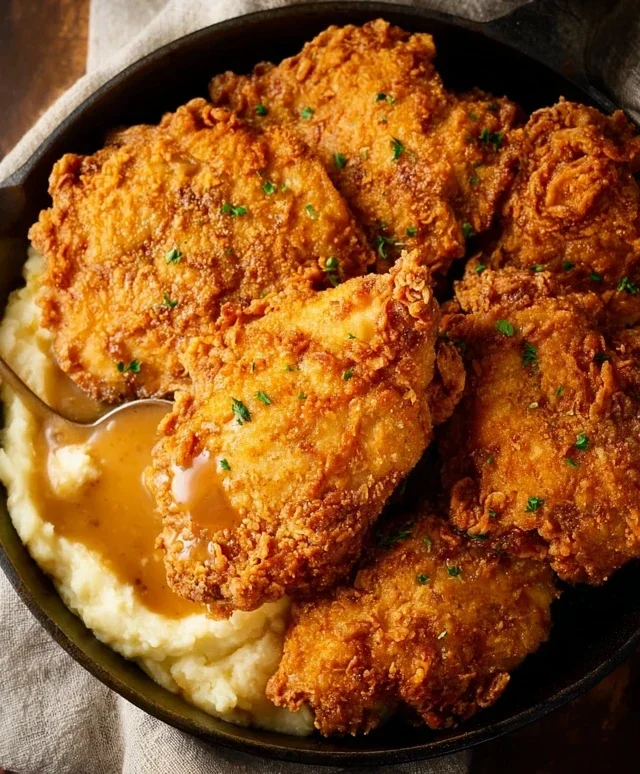
Once the chicken is beautifully golden brown and cooked through, carefully remove it from the skillet using tongs. Place the fried chicken on a clean wire rack set over a baking sheet. This allows any excess oil to drain off, keeping your chicken wonderfully crispy. Allowing the chicken to rest for a few minutes before serving is also important. This allows the juices to redistribute throughout the meat, resulting in a more tender and flavorful bite. Serve your homemade country fried chicken hot with your favorite sides – mashed potatoes, coleslaw, or biscuits are classic pairings. Enjoy the fruits of your labor!
Conclusion:
So there you have it! This country fried chicken recipe is a true classic for a reason. It’s all about achieving that perfect balance: a gloriously crispy, golden-brown crust that gives way to unbelievably juicy and tender chicken on the inside. The simple yet effective seasoning blend ensures every bite is packed with savory flavor, making it a comforting and crowd-pleasing dish that’s surprisingly achievable for home cooks.
This fried chicken is incredibly versatile when it comes to serving. It shines alongside traditional Southern sides like creamy mashed potatoes, buttery biscuits, and a tangy coleslaw. For a lighter touch, consider a fresh green salad or some steamed green beans. If you’re feeling adventurous, try swapping out some of the chicken pieces for tenders for a quicker cook time, or experiment with adding a pinch of cayenne pepper to the flour mixture for a subtle kick of heat. Don’t be intimidated by frying; follow these steps carefully, and you’ll be rewarded with a meal that’s truly worth the effort. I truly encourage you to give this country fried chicken a try – your taste buds will thank you!
Frequently Asked Questions:
What oil is best for frying chicken?
For the best results with country fried chicken, a neutral-flavored oil with a high smoke point is ideal. Vegetable oil, canola oil, or peanut oil are excellent choices. These oils will get hot enough to crisp the chicken beautifully without burning.
Can I make this chicken ahead of time?
While country fried chicken is best enjoyed fresh, you can prepare parts of it in advance. You can dredge the chicken and refrigerate it for a few hours before frying. However, frying it just before serving will ensure the crispiest texture.
My chicken isn’t crispy. What went wrong?
There are a few common culprits. Ensure your oil is hot enough before adding the chicken (around 350-375°F or 175-190°C). Don’t overcrowd the pan; fry in batches so the oil temperature doesn’t drop too much. Also, make sure the chicken pieces are thoroughly coated in the flour mixture and that you’re not flipping them too early; let them develop a nice golden crust before turning.
Country Fried Chicken
Crispy, golden-brown, and incredibly flavorful country-style fried chicken breasts.
Ingredients
-
4 boneless skinless chicken breasts
-
2 cups buttermilk
-
2 large eggs (whisked)
-
3 teaspoons salt
-
1 ½ cup all-purpose flour
-
½ cup breadcrumbs
-
2 ½ teaspoons seasoned salt
-
¾ teaspoon paprika
-
½ teaspoon cayenne pepper
-
1 ½ teaspoon black pepper
-
1 ½ cups vegetable oil
Instructions
-
Step 1
Place chicken breasts in a large bowl and cover with buttermilk. Let marinate for at least 30 minutes, or up to 4 hours in the refrigerator. -
Step 2
In a shallow dish, whisk together the all-purpose flour, breadcrumbs, seasoned salt, paprika, cayenne pepper, 3 teaspoons salt, and 1 ½ teaspoon black pepper. -
Step 3
Remove chicken from buttermilk, letting excess drip off. Dredge each piece of chicken thoroughly in the flour mixture, pressing to ensure it’s well coated. -
Step 4
Heat vegetable oil in a large, heavy skillet over medium-high heat until shimmering. The oil should be about ½ inch deep. -
Step 5
Carefully place chicken pieces in the hot oil, ensuring not to overcrowd the pan. Fry for 5-7 minutes per side, or until golden brown and cooked through (internal temperature of 165°F/74°C). -
Step 6
Remove chicken from skillet and place on a wire rack set over a baking sheet to drain any excess oil. Let rest for a few minutes before serving.
Important Information
Nutrition Facts (Per Serving)
It is important to consider this information as approximate and not to use it as definitive health advice.
Allergy Information
Please check ingredients for potential allergens and consult a health professional if in doubt.